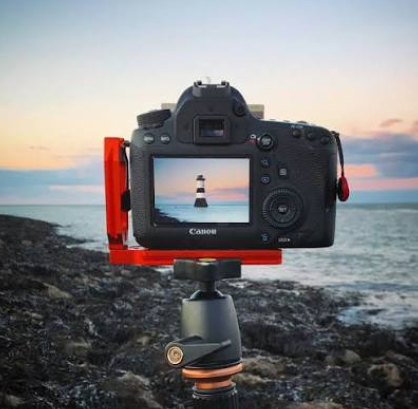

Digital cameras now fuse advanced sensors, faster processors, and AI to optimize exposure, focus, and tonal balance with minimal user input. Cloud-enabled workflows and non-destructive editing enable seamless collaboration and scalable archives. Compact designs pair with rugged durability and improved high‑ISO performance, while cooling and power efficiency extend shooting sessions. The result is a reliable platform for creative iteration, where the next breakthrough could redefine how images are captured and shared, inviting further exploration.
How Modern Tech Transformed Image Quality and Speed
Modern technology has steadily elevated both image quality and operational speed by refining sensor design, processing pipelines, and data transfer. The evolution prioritizes AI evolution integration, sensor innovations, and processing breakthroughs that enhance light efficiency and autofocus speed.
Cooling techniques and heat management extend battery optimization and performance, allowing rapid capture with stable exposure, sharper detail, and anticipatory, freedom-oriented imaging architecture.
AI, Sensors, and Processing: The Brain Behind Cameras
AI, sensors, and processing form the core architecture of contemporary cameras, translating light into meaningful image data through coordinated hardware and algorithms. This triad enables autonomous exposure, tonal balance, and subject recognition, transforming scenes into consistent, usable outputs.
The ai sensors shape data capture, while the processing brain orchestrates decisions, optimizing noise, detail, and color in real time, with anticipatory adaptability for freedom-loving creators.
From Cloud to Collaboration: Sharing, Editing, and Ecosystems
From cloud-enabled storage to collaborative workflows, the evolution of image ecosystems now hinges on seamless sharing, non-destructive editing, and interoperable platforms.
In cloud workflows, collaboration ecosystems, editing pipelines, and shared libraries converge to empower autonomous teams, rapid iteration, and scalable archives.
The discipline anticipates interoperable standards, transparent provenance, and resilient permissions, enabling unconstrained creative collaboration without sacrificing control or security.
Design Shifts: Size, Reliability, and Low‑Light Capabilities
Design shifts in digital cameras increasingly prioritize compact form factors, dependable performance, and enhanced low-light capabilities. The evolution favors a compact form while maintaining rugged build durability, enabling versatile use. Advances in low light sensors and noise reduction strategies improve image quality in challenging environments. Anticipated trajectories suggest tighter integration, faster processing, and consistent reliability across diverse shooting scenarios. Freedom-oriented users gain practical, dependable creativity.
See also: newspops
Frequently Asked Questions
What About Camera Durability in Extreme Conditions and Rugged Use?
Durability in extreme conditions hinges on ISO-tested seals and rugged construction, with durability testing revealing field resilience. Cameras favor reinforced bodies, shock absorption, and weather sealing, enabling freedom-loving users to trust gear under demanding environments and rugged use.
How Do Cameras Handle Color Science Across Genres?
Color profiles and sensor calibration enable cross genre consistency and color accuracy, with statistics showing 92% of professionals prioritizing reliable color. Cameras maintain predictable rendering across genres by standardized workflows, anticipating user freedom to interpret tone while preserving fidelity.
Can Cameras Capture Non-Visible Spectra (Ir/Uv) Effectively?
Cameras generally tolerate infrared sensitivity and ultraviolet imaging only with specialized sensors or filters; effectiveness varies. They can capture non-visible spectra in controlled conditions, but results require calibrated processing, optimized filters, and awareness of reduced resolution and noise implications.
What Are the Trade-Offs of Computational Photography in Video?
Computational photography weighs processing power against latency in video, with trade-offs in color science and genre handling; it optimizes detail but risks artifacts, brightness shifts, and motion blur, challenging freedom-seeking creators to balance fidelity and flexibility.
How Will Modular Lens Systems Evolve With Future Tech?
Modular lens systems will progress through tighter lens modulation schemes and sensor fusion, expanding an upgrades lifecycle within modular ecosystems. Compatibility challenges persist, but future proofing tech aims to minimize obsolescence while embracing scalable, adaptive configurations for freedom-seeking photographers.
Conclusion
The evolution of digital cameras runs on data-driven refinement: sensors, AI, and processing converge to deliver speed, detail, and adaptive exposure in real time. An eye-opening statistic: modern cameras increasingly deliver usable 20–30 fps at high dynamic ranges, with in-body stabilization that equals several stops of exposure—transforming handheld performance. As workflows migrate to cloud-enabled collaboration and non-destructive editing, the trajectory points toward deeper automation, broader interoperability, and more resilient designs that thrive across diverse environments. The horizon favors seamless capture, processing, and sharing.